
A growing fintech ships code continuously, and vulnerabilities accumulate at nearly the same pace. When engineering finally turns its attention to security, the first problem is often choosing a tool. The second is what happens after the tool is deployed: hundreds or thousands of findings, all competing for attention. The team still has to figure out what matters, what is actually exploitable, and what needs to be fixed first.
The difficulty is not simply identifying vulnerabilities. Security tools can scan code and infrastructure for potential weaknesses. The harder part is determining which findings create real risk to the business, particularly in applications handling payment data, account credentials, or KYC documentation. Engineering then has to resolve those issues before they become a breach, an audit finding, or a blocker during due diligence.
An good AI assisted security workflow can take on more of that work. Instead of giving engineering another list to sort through, it can use the application's context to determine which vulnerabilities are actually reachable, prioritize the issues that matter, and help engineers remediate them.
With Rezliant Maestro, a fintech connects its codebase, cloud environment, or web application. Maestro analyzes the security posture using the application's actual context, determines which vulnerabilities are genuinely exploitable, and generates remediation for engineers to review. The result is a security workflow built around what needs attention, rather than everything a scanner can find.
Here is how that workflow functions in practice.
1. Connect the Right Application
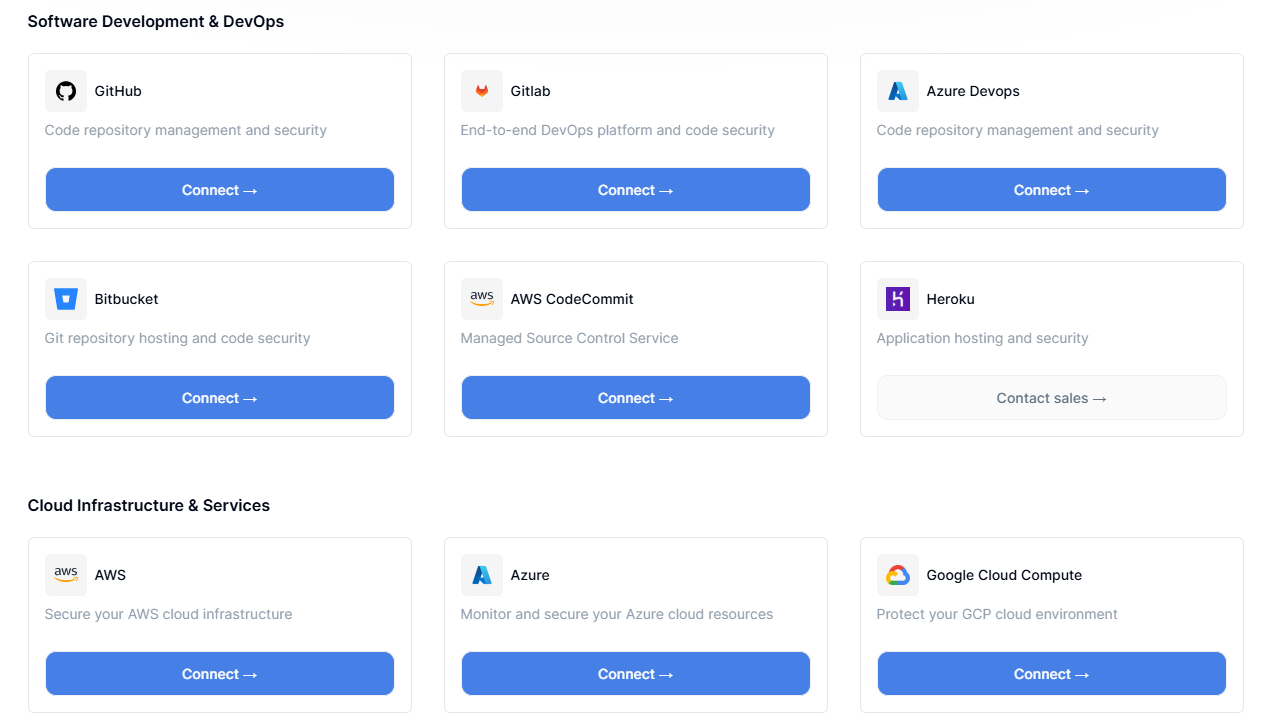
The workflow starts with connecting what needs to be analyzed, and Maestro supports several ways to do this depending on how the application is built and hosted. A codebase can be connected through integrations built for platforms like GitHub, GitLab, and Azure DevOps. A cloud environment can be connected directly. And if an application is simply hosted on a domain, without direct code or cloud access, Maestro can scan the live site itself.
This matters because not every fintech's stack looks the same. A team may have full repository access to offer, or they may only have a customer-facing web application to point to. Maestro is built to start from whichever entry point is available, so a team is never blocked from analysis by how their application happens to be deployed.
2. Give AI the Context It Needs to Understand Risk
A severity score alone does not indicate whether a vulnerability matters. It does not show whether the vulnerable function is ever actually called, whether it sits behind authentication, or whether it is exposed to the outside world at all.
Maestro's context comes from two directions. It analyzes the code itself, tracing how components connect and where a vulnerability is actually reachable. It also incorporates the business context around the application, since a vulnerability in a payment processing path carries different weight than the same vulnerability in an isolated internal tool. Combining both is what allows Maestro to judge which findings deserve attention, rather than ranking everything by severity score alone.
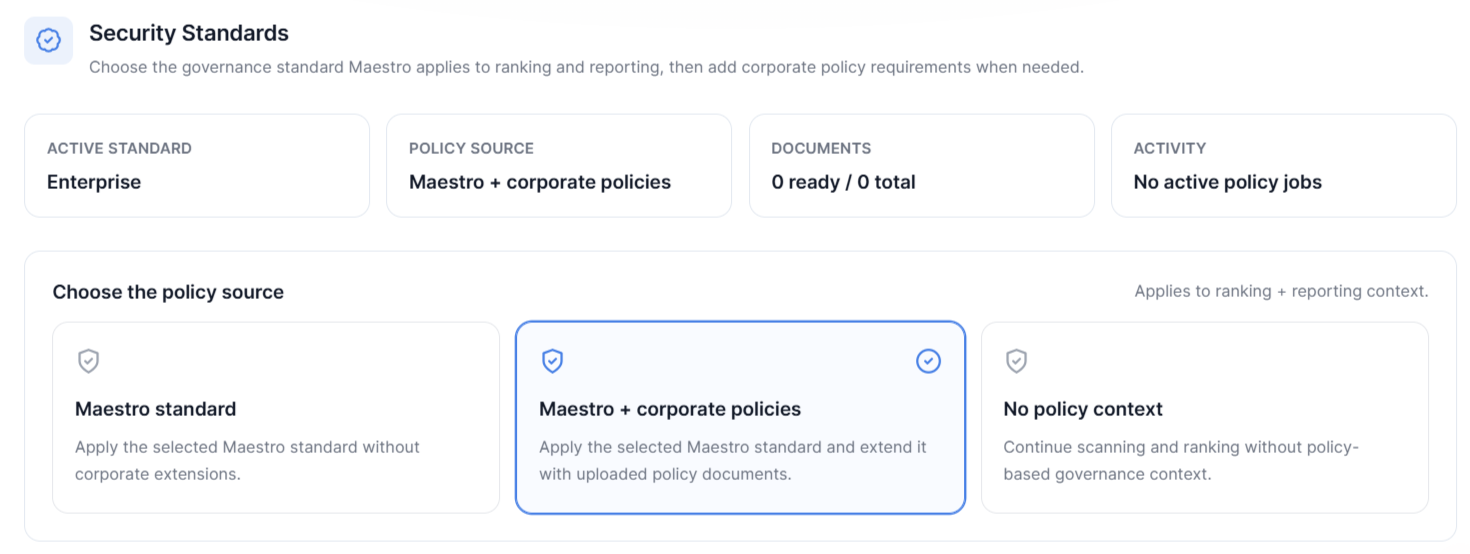
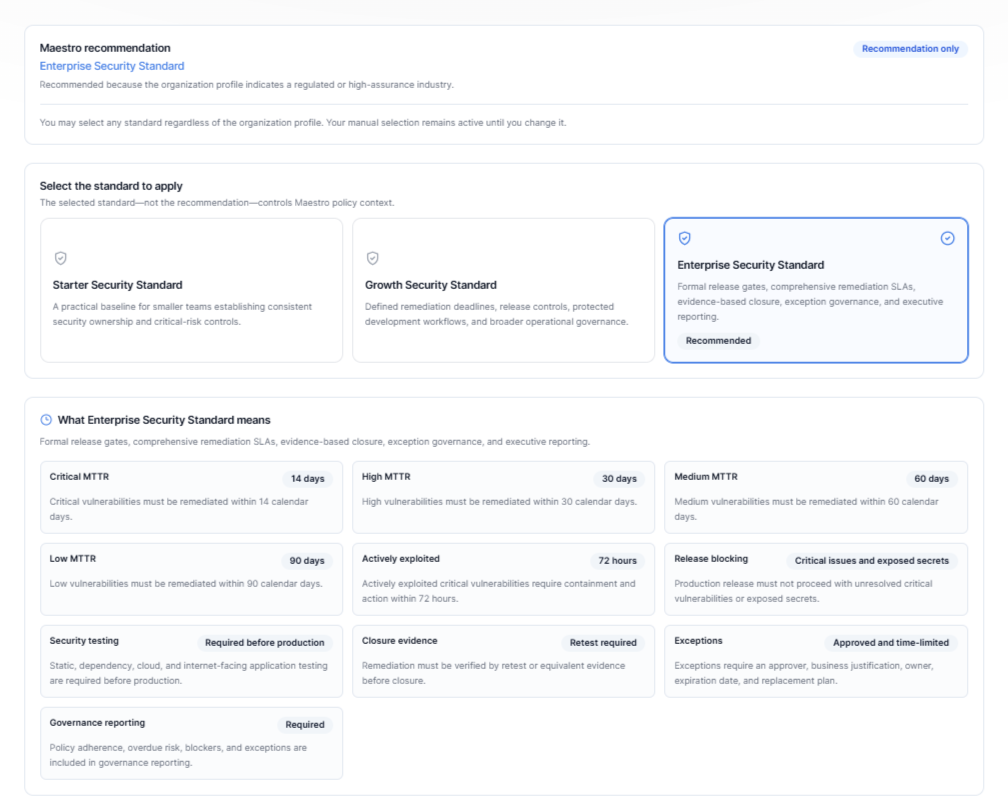
No internal company policies? No problem. Maestro has inbuilt deep security guidelines for you.
3. Prioritize, Remediate, and Review
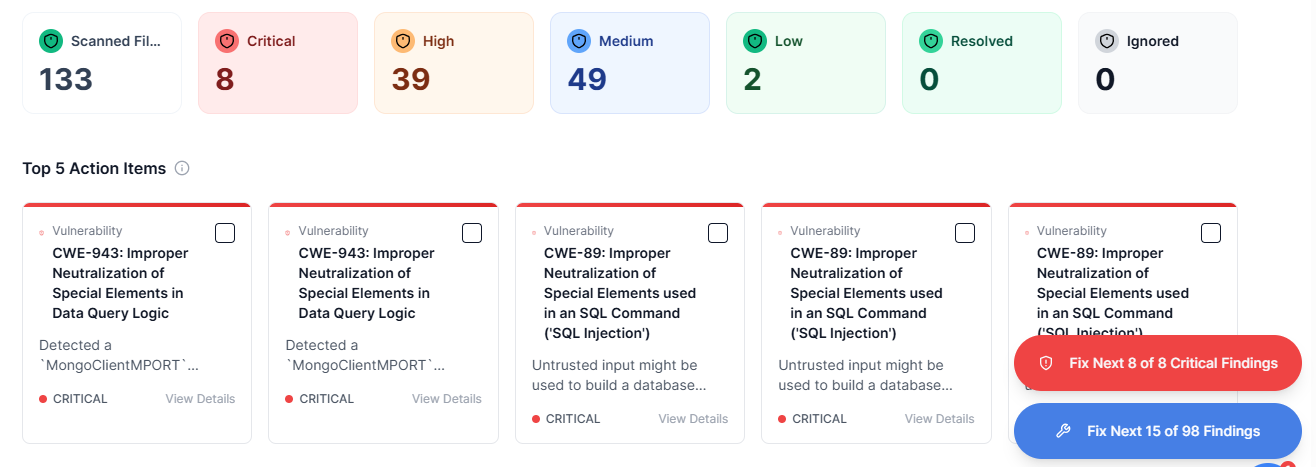
Once that context is established, Maestro surfaces the vulnerabilities it has found and ranks them by severity within the context of the customer's environment. Findings are categorized as Critical, High, Medium, or Low, giving the engineering team a starting point for understanding what needs attention. Each finding can then be opened individually to see what the vulnerability is, where it exists, and how it affects the application's security posture.
This gives the team more than a list of vulnerabilities. It provides the context needed to decide whether a finding represents a meaningful risk to the application and whether it needs to be addressed immediately or can be handled later.
Once an issue has been identified for remediation, Maestro generates the fix and opens it as a pull request against the existing repository. Engineers do not have to manually work through every finding, determine the required code change, and create a fix from scratch.
This becomes particularly useful when a scan produces a large number of high priority findings. If an assessment surfaces 9 or 24 critical vulnerabilities at once, for example, Maestro can generate fixes and pull requests for all of them in a single action rather than requiring an engineer to address each vulnerability individually. The goal is not simply to identify more issues. It is to reduce the amount of manual work required to move from finding to fix.
The engineer still has the final say. Every proposed change can be reviewed inside the platform where the team already manages its code or cloud environment. Engineers can inspect the remediation, make changes if necessary, and decide what gets approved and merged.
AI does not independently merge changes into production. Maestro generates a remediation proposal and puts it into the existing engineering workflow, keeping human review and approval in the process.
The result is a workflow that moves from identifying a vulnerability, to understanding its relevance, to generating a potential fix, without requiring the engineering team to manually coordinate every step between those stages.
Keep Security Running Continuously
Application security is not a one time review. Code changes every day, infrastructure changes with it, and new vulnerabilities can be introduced with any commit. A security assessment that was accurate a few weeks ago may no longer reflect the application's current state.
Maestro runs automated scans daily, so the environment is continuously reassessed without requiring an engineer to remember to start a scan manually. This gives the team a recurring view of its security posture as the application changes.
It also keeps remediation from becoming a one time exercise. As new code is pushed and the environment evolves, Maestro can identify newly introduced vulnerabilities and prioritize the issues that require attention. Engineers can then work from an up to date view of their security posture rather than returning to an increasingly outdated security snapshot.
For a fintech shipping code continuously, security becomes part of the development cycle rather than another review that has to be scheduled, remembered, and repeated manually.
Reporting That Makes Sense to Everyone, Not Just Engineers
Security reporting has a specific problem. A vulnerability that was found and fixed before it was ever exploited is hard to explain to someone outside the security function. From the outside, nothing happened, so it can be difficult to communicate why the work mattered, even though the entire point was resolving the issue before it became an incident.
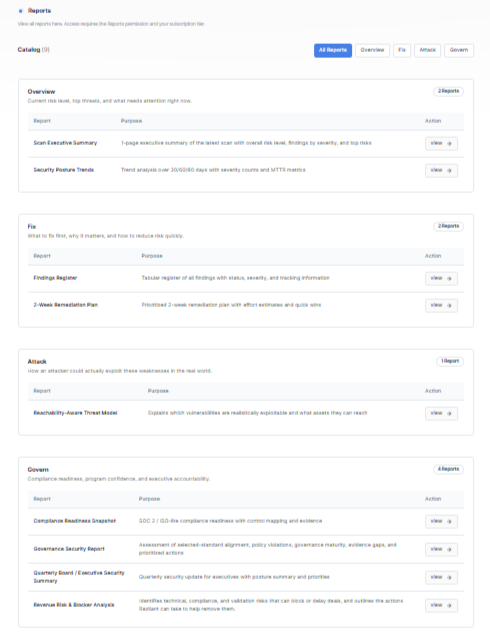
Maestro addresses this with reporting built for different audiences rather than a single generic export. There are reports suited for presenting security posture to customers during a sales or procurement conversation, reports built for executives who need a status update without a technical walkthrough, and reports that map directly to readiness for SOC 2, PCI DSS, and ISO 27001. That information comes directly from the platform, instead of being assembled manually from a scanner export, a spreadsheet, and whatever ticketing tool tracked the fixes.
What AI Should and Should Not Do in Application Security
AI is well suited to the parts of application security that are repetitive, time consuming, and pattern based. It can trace reachability across a codebase, analyze findings against the application's context, prioritize vulnerabilities based on their potential exposure, draft remediation for known vulnerability classes, open pull requests, and assemble reports from existing security data.
Those tasks can take engineers significant time when handled manually, but they do not necessarily require an engineer to make the decision at every step.
What AI should not do is automatically decide what gets merged into production. That judgment belongs to engineers who understand the systems behind the findings, the business processes those systems support, and the potential impact of a change. A fix affecting a payment flow may require more scrutiny than a change to an internal service. A system handling regulated data may have additional compliance requirements. Engineers are also the ones accountable for deciding whether a proposed remediation is safe to ship.
An AI assisted security workflow should remove repetitive work without removing engineering judgment. The technology handles the analysis and remediation work it can automate, while engineers remain responsible for reviewing and approving the changes that affect their applications.
Get Started with Maestro
Maestro brings vulnerability analysis, prioritization, remediation, continuous scanning, and security reporting into a single workflow. For fintech teams, that means engineers can spend less time sorting through security findings and more time addressing the issues that actually require their attention.
Connect your codebase, cloud environment, or web application to Maestro and see what it identifies in your environment. From there, the team can review findings, generate remediation, and approve the changes that are ready to ship.